
Walkway construction in Lancaster CA - a path that stays firm and even
Tired of a muddy shortcut or a cracked walk that trips people? We build concrete and paver walks on ground prepared to hold them.
- Service
- Walkway construction
- Call
- (661) 952-4077
Is it time for a new walkway?
A worn dirt path
You see a bare strip where everyone cuts across the yard to the door or the side gate. It usually means a walk belongs right there, and the longer you wait, the more mud and grit get tracked inside.
Cracked or lifted slabs
An old concrete walk has split, or one section sits higher than the next at a joint. That usually points to a base that shifted underneath, and as long as it stays that way, someone can catch a toe on it.
Pavers that rock or sink
Pavers wobble underfoot, sit low in spots or creep apart at the edges. The base or the edging that holds them has usually given way, and if it's left alone, the loose area spreads to the pavers around it.
What does building a walkway in Lancaster involve?
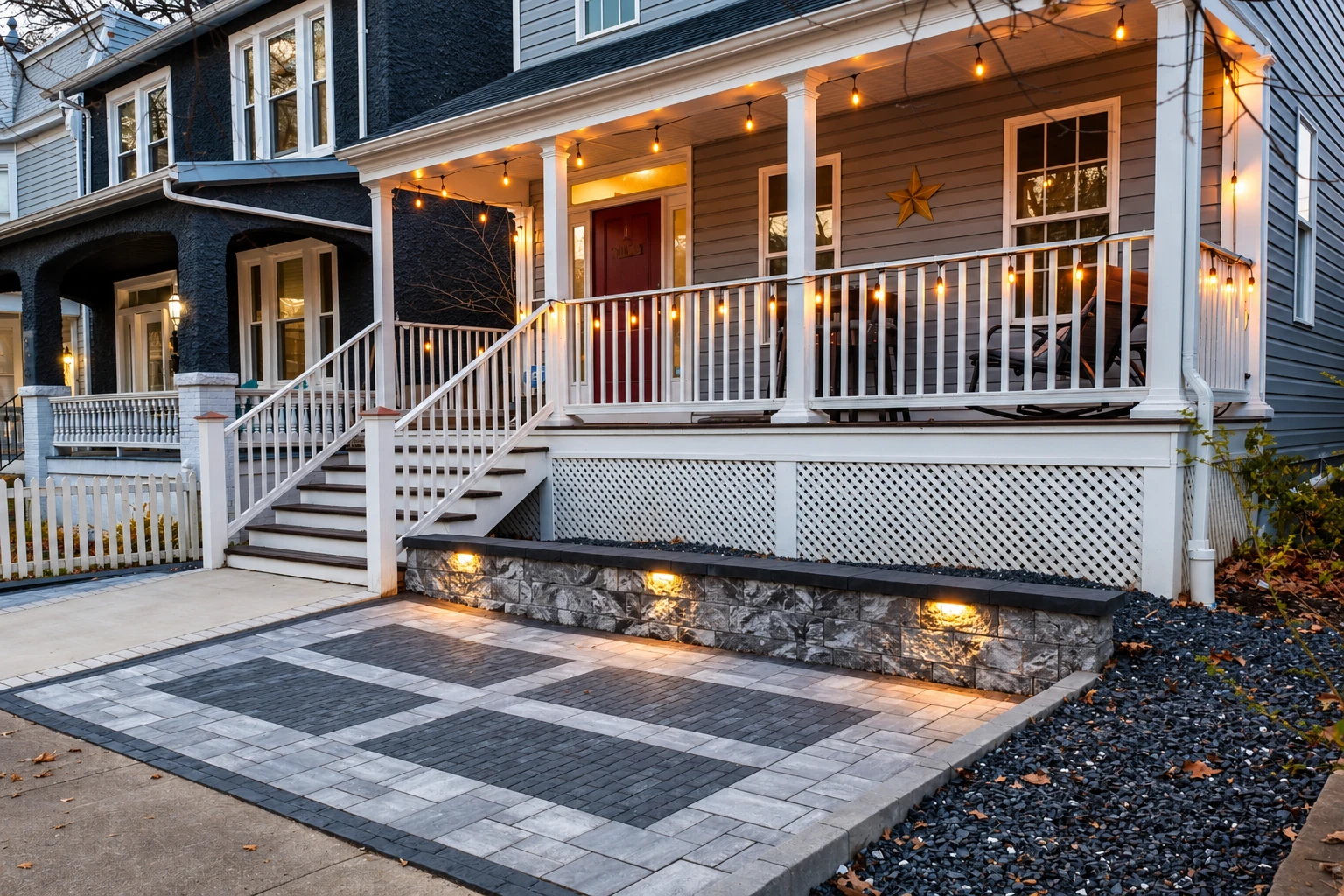
Walkway construction in Lancaster, CA means building a path across your property, either poured concrete that's formed, poured and finished, or a surface of concrete pavers set on a packed base. Done right, it gives you a firm, even way to the front door, the side yard or the patio.
Most people call us about a dirt path the family has already worn into the yard, or an old walk that has cracked and lifted, and either way the fix starts with what's underneath. The price moves with the walk's length and width, concrete or pavers, how much digging and base it needs, and whether anything heavier than feet will cross it, since that can call for a thicker slab. The schedule turns on the material, the prep and whether a permit has to come first, and the written estimate I give you spells out what we'd do and why. We're licensed and fully insured, we check the permit side with the building office for your address, and if you're redoing the front of the house anyway, the walk can be planned to match new driveway pavers.
Details to note before an estimate
- Rough length and width of the walk
- Where the walk starts and ends
- Concrete or pavers, if you know
- Anything that will drive or roll over it
- Height above the ground or any steps
- Lights or plumbing planned along it
How we build a walkway, start to finish
Before we dig, we have the underground lines marked, because nicking a buried pipe or wire turns a simple walk into a much bigger problem. Then I help you weigh poured concrete against pavers for the look you want and how the walk gets used. Most of our effort goes into ground prep you won't see when it's done. We dig out the route and pack the ground, and for a concrete walk we set forms, pour and finish the surface. For pavers, we spread and pack the base in layers, build the edging that keeps the pavers from drifting, and level a bed of sand with a straightedge before the first paver goes down, so most of a paver walk is finished before you see a single paver.
A walk usually runs past other masonry, and it looks better when the pieces are planned together. If you want a low wall to frame the path, we handle brick wall installation, and for natural stone steps, borders or caps along the route, our stone masonry work ties in with the same layout.
Work that often goes with a new walkway
Brick wall installation
A short brick wall beside a new walk gives the path a clear edge and keeps foot traffic out of the planting beds next to it.
Stone masonry
Natural stone steps or borders suit a walk that climbs a slope or needs to match stonework already on the front of the house.
What happens after you call about a walkway?
Call or send a message
Tell us roughly where the walk goes and how long it is, by phone at (661) 952-4077 or through the form. We get back to you and set a time for me to come out.
I walk the job with you
I look at the ground, the route and anything that will cross it, then write an estimate in plain words that says what we'd do and why. Ask me as many questions as you like, because the price is on paper before you decide anything.
We handle permits and build
If the walk needs a permit, we apply for it as your contractor and set up the inspections, and Lancaster requires it to be issued before any work begins. Our crew does the work, and I check in while it's underway.
We walk the finished job
When it's done, I walk the new walkway with you so you can see the edges, the surface and how it meets the house. Satisfaction guaranteed on every job is how we work.
Questions before you build a walkway
How much does a concrete walkway cost in Lancaster, CA?
An installed residential sidewalk in the Los Angeles area usually costs about $6 to $11 per square foot, so treat that as the going rate around the region, not our price. Where your walk lands depends on its size, concrete or pavers, how much ground prep it needs and whether vehicles will cross it. I'll put the Lancaster price for your walk in writing after I've looked at the job.
Do I need a permit to build a walkway in Lancaster?
The City of Lancaster's permit rules exempt a walk that sits no more than 30 inches above the ground and isn't over a basement or a story below. Any wiring, plumbing or mechanical work along it, like path lights, needs its own permit unless the building code exempts that too, and work in the public right-of-way or grading permits go through the city's Capital Engineering Division. We check with the building office for your address, and when a permit is needed we apply for it as your contractor.
Who is allowed to build a walkway in California?
A licensed contractor is, since California's contractor board licenses concrete contractors to form, pour and finish flat concrete like walks. The state's exemption for minor work tops out at $1,000, and it only applies when the job needs no permit and the person doing it has no one working for them. In Lancaster, permits go only to an owner who lives at the property, a licensed contractor or an authorized agent of either, and we're licensed and fully insured.
What is the best way to choose between a concrete and a paver walkway?
Choose by how the walk gets used and the look you want, since both work well on a properly prepared base. Most concrete walks are around four inches thick, though one that will carry vehicle weight may need a thicker slab that costs more, while a paver walk takes more work below the surface but lets you lift and reset a section later. For a plain path to the front door I usually lean toward poured concrete, and I'll suggest pavers when you want a pattern or may need to get under the walk someday.
How do I keep a permeable paver walkway draining?
Keep dirt out of it, because University of Florida extension guidance says permeable paving loses its ability to soak in water as sediment clogs the gaps. That guide's advice is to lay out the walk so runoff from planted areas drains somewhere else, since that water tends to carry dirt with it. If you're considering a permeable walk, I'll look at where your water runs before we settle the layout.
How long does it take to build a walkway?
Most of the time goes into ground prep, so the schedule turns on the walk's size, concrete or pavers, and how much digging and base it needs. Lines have to be marked before anyone digs, and many areas ask for a call at least two days ahead for that. If the walk needs a permit, Lancaster wants it issued before work begins, so that comes first.
Get a written estimate for your new walkway
We reply within 1 business day, and the on-site estimate is free and obligation-free. After you send the form, we reach out to set a time, I come look at the route and the ground with you, and you get a written estimate that says what we'd do and why.
Explore our services and areas
Services
Start planning your new walkway
Call (661) 952-4077 or use the form and mention the walk's rough size, how high it sits off the ground and any lights or plumbing planned along it, so I can check the permit side before I come out.