
Concrete block walls in Lancaster CA - a wall that stands straight and sheds water
Leaning fence, cracked block or a bare property line? We plan the footing, steel and water protection first, then build a wall that stands firm.
- Service
- Concrete block walls
- Call
- (661) 952-4077
How do you know it's time for a new block wall?
Wall leaning out of line
A wall that tips toward the street or the neighbor's yard usually has a footing too small to hold it, or no steel tying it into that footing. Waiting lets the lean grow with every windstorm, and once it goes over you're paying to haul it away before anything new can go up.
Cracks running through block
A crack that steps up the mortar joints or splits straight through the block usually means the wall had no plan for shrinkage, or the ground under the footing has moved. Left open, those cracks let water into the wall, and they tend to widen and travel along the run.
White crust near the base
A white, chalky crust is salt that water left behind as it dried, so it tells you water is moving through the block, often from the top or from sprinklers. On its own it's mostly a looks problem that can wait, but if the block faces start flaking, the wall is taking on more water than it should.
What goes into building a concrete block wall in Lancaster?
A concrete block wall in Lancaster, CA is built from concrete masonry units laid in mortar on a footing, and it can stand on its own as a fence or carry weight as part of a structure. We build them for property lines, privacy and yards, and most of what makes a block wall stand straight for years gets decided before the first block is set.
Most calls start with a property line that needs a wall, an old wall that's leaning, or a yard you want closed in. The first choice is how the wall stands up, because a fence usually sits on one continuous footing or spans between pilasters, which are block columns on their own footing pads, or between short side walls called returns, and that choice decides where the footings go. Length and height, how big the footing has to be, how much steel goes in, whether the wall holds back soil, old block to tear out and the cap and finish you want move the price most, while the permit question and how much digging the site needs move the schedule. My written estimate lays out each of those for your wall.
Details to note before an estimate
- Rough length and height of the wall
- Where it runs on your lot
- Whether it holds back soil
- Old wall or fence to remove
How we build a concrete block wall
Before we set a single block, I talk through the footing, the steel and how the wall will handle cracking with you, and we go over your choices for keeping water out of it over the years, because those are hard to change once the wall is up. Then our crew lays out the line, digs and pours the footing, and sets dowels, steel rods that run up out of the footing into the wall, since on a wall that stands on its own the footing and dowels are what keep it from tipping or sliding when wind pushes on it. We lay the block with steel where the plan calls for it, grout the reinforced cells, put in any control joints we agreed on, cap the top and haul off what's left.
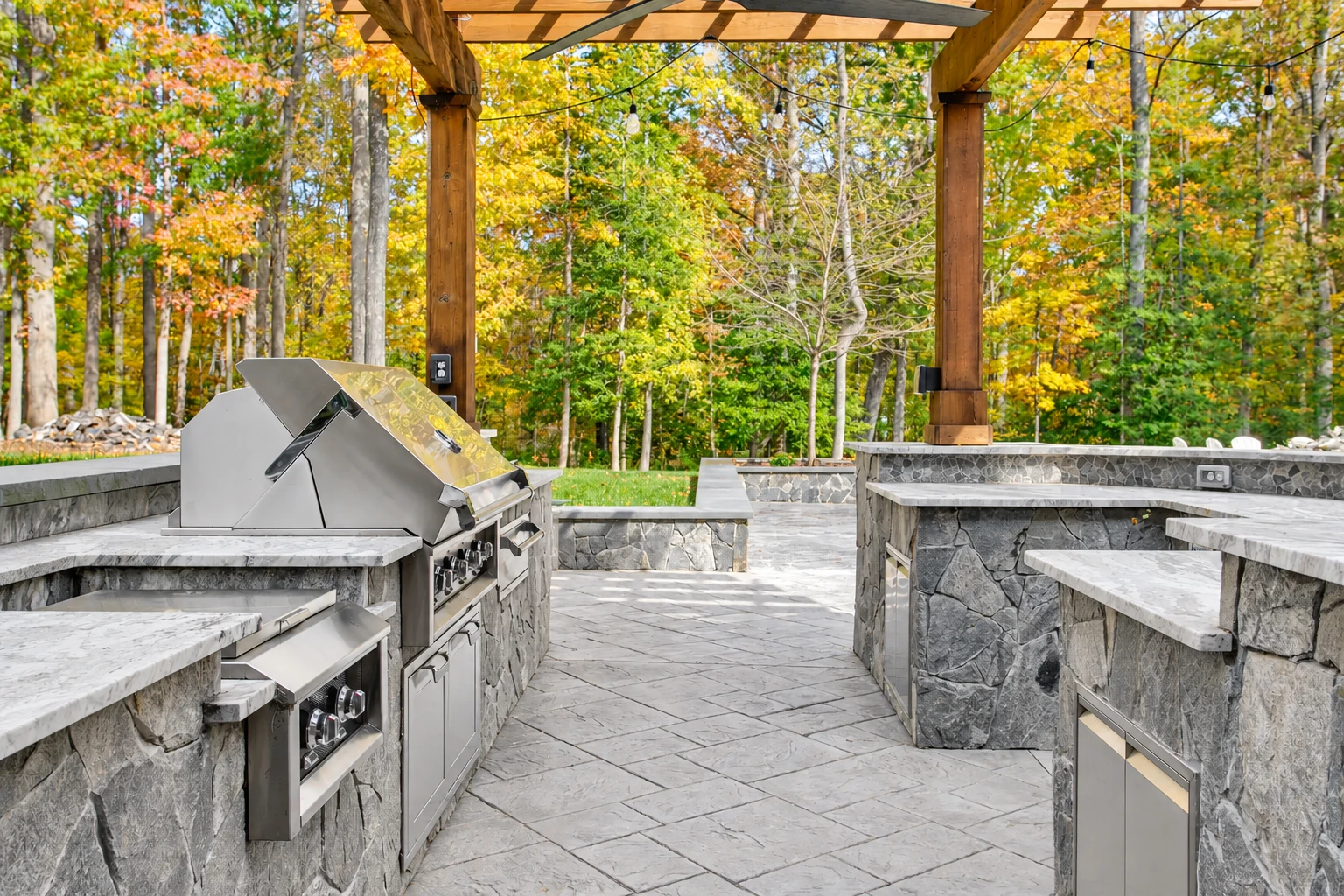
If the block is part of a building rather than a yard, such as an addition, a garage or a crawlspace, that's foundation block wall installation, which carries the house and gets planned for that load. Plenty of yard walls also end up holding a grill or a counter, and we build the block bases for outdoor kitchen masonry on the same kind of footing, often tied into a new patio wall.
Other block work people ask us about
Foundation block wall installation
Adding a room or garage on block calls for a wall that carries the house, with its footing and steel sized for that weight.
Outdoor kitchen masonry
When you want an outdoor grill, counter or bar, a block base on its own footing keeps the countertop level and the joints tight.
What happens after you call about a block wall in Lancaster?
Call or send us a message
Call (661) 952-4077 or use the form and tell us roughly what wall you have in mind. We'll set a time for me to come out that works around your schedule.
I look and write it up
I walk the line with you, look at the ground and anything already standing, and figure out what's behind any trouble with an old wall. You get a written estimate in plain words that lays out the footing, the steel, the crack plan, your water options and the price.
We handle the permit
We check with the building office that covers your address and, when the wall needs a permit, apply for it as your contractor. In Lancaster, Building and Safety reviews the plans and inspects at points during construction, so we set those inspections around the work.
We build, then walk it
Our own crew builds the wall while I check in along the way, and when it's done I walk the finished wall with you. Satisfaction guaranteed on every job.
Questions about building a concrete block wall
How much does a concrete block wall cost in Lancaster?
The price comes down mostly to the wall's length and height, the footing it needs and how much steel goes in, so I give you a figure once I've seen your lot. A wall that holds back soil, old block or fence to tear out, pilasters and gate openings, a stone or brick cap and a water repellent mixed into the block all add to it, and a plain fence on open, level ground costs the least. My written estimate breaks those pieces out so you can see what each choice adds.
Do I need a permit for a block wall in Lancaster?
Lancaster's list of work that doesn't need a permit includes fences not over 7 feet high and retaining walls not over 4 feet, measured from the bottom of the footing to the top of the wall, so a taller wall or a bigger retaining wall falls outside it. That retaining wall exemption also leaves out walls with extra weight on the soil they hold back, like a driveway or a slope above, and any permit has to be in hand before work starts. We check with the office that covers your address before we plan anything, and if you'd like to ask yourself, the city's permit technicians answer questions at (661) 723-6144 or through the Lancaster permits page. Outside the city, in Palmdale, Rosamond or anywhere else we work across the Antelope Valley, we check with the city or county office instead.
Who can build a block wall in California?
A contractor licensed by the state in masonry can, because California's masonry classification covers laying block for walls that carry loads and walls that don't, for buildings and for fences. The state lets an unlicensed person take small jobs under a $1,000 limit, but only when the work needs no permit and they employ no one, so a wall that needs a permit falls outside it. We're licensed and fully insured.
How do I keep a block wall from cracking?
Plan for it from the start with horizontal steel, control joints or both, since block shrinks a little as it cures. The concrete masonry trade association recommends horizontal reinforcement plus control joints, which are planned breaks in the wall placed by local practice, and with enough horizontal steel a wall may not need control joints in some cases. I'll tell you which approach we'd use on your wall and why before we start.
What is the best way to keep water out of a block wall?
Decide before the wall goes up, because an integral water repellent has to be mixed into both the block and the mortar before construction, while a surface repellent goes on afterward and needs reapplying after a period of years. A coping, the cap along the top, also keeps water from getting in and can finish the look, and concrete brick, cast stone, brick and natural stone all work as copings on block. On a new wall I usually lean toward integral since it's done once, but a surface treatment is a fair choice if you'll keep up with it.
How do I clean salt deposits off a block wall?
One maker's guide says efflorescence, the white salt crust, usually comes off by dry brushing first and then flushing with plenty of clean water. Brush it dry before you wet it, so you're not washing the salt back into the block. If it keeps coming back, water is getting into the wall, and a missing cap or a sprinkler hitting the face is where I'd look first.
Get a written estimate for your block wall
Send the form and we reply within one business day to set a time that suits you. I come out, walk the wall line with you and give you a free quote on site, written in plain words. It's obligation-free, so you can take your time deciding.
Explore our services and areas
Services
Plan your block wall before anyone digs
Old footings, fence posts and roots in the line all change the dig, and I'd rather find them on the first visit than with the crew standing there.