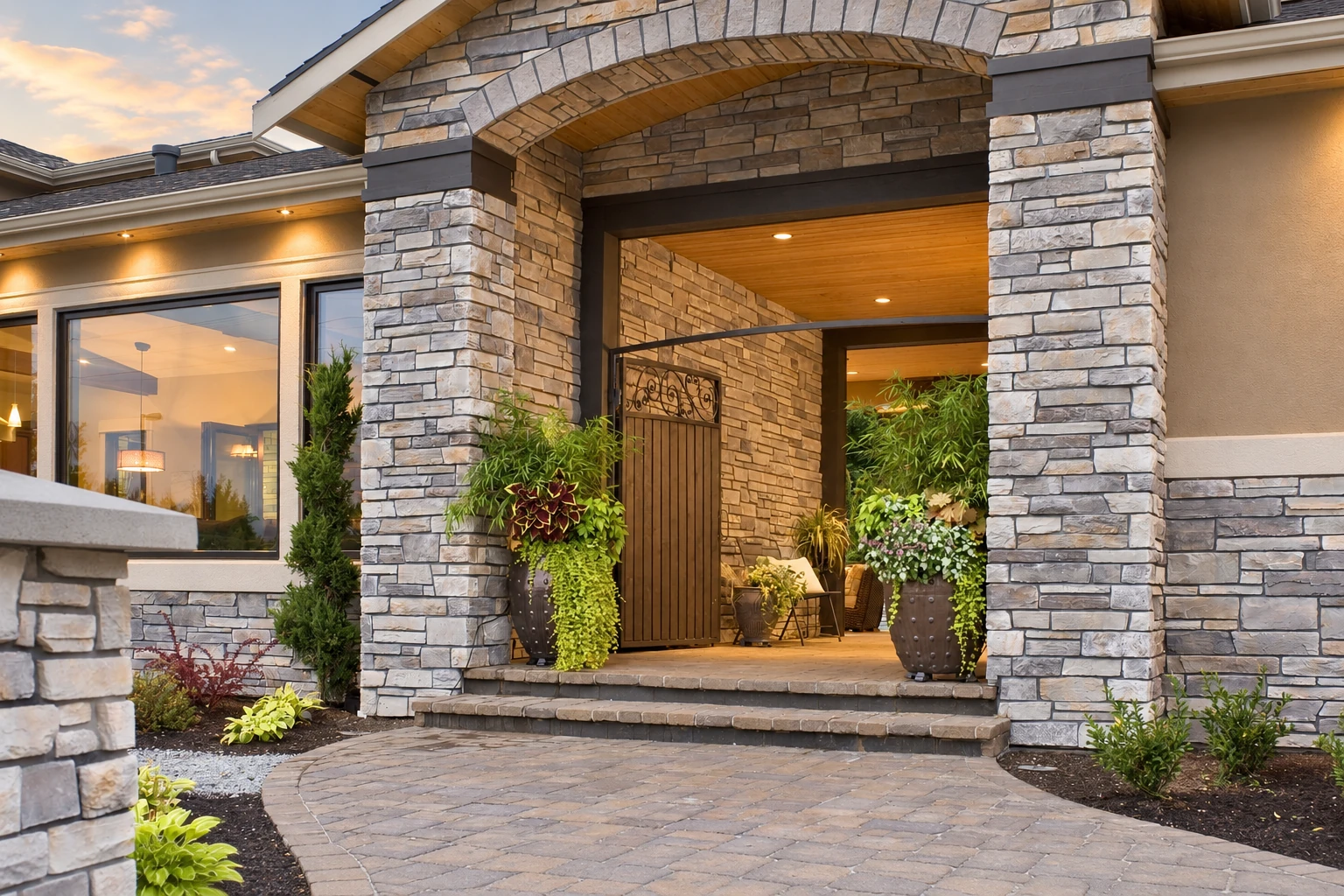
Stone veneer installation in Lancaster CA - a stone face on a sound wall
Tired of a plain block or stucco wall? We check the wall first, then set stone that bonds to it and looks right.
- Service
- Stone veneer installation
- Call
- (661) 952-4077
How do you know it's time for stone veneer?
Plain block in the yard
You've got a gray block wall along the yard or patio that does its job but looks unfinished. Sound block is usually one of the easiest walls to face with stone, so there's no rush here beyond wanting it to look better.
Cracks you'd like covered
Some people want stone over a wall mainly to hide cracks they're tired of looking at. Cracks usually mean something behind the surface is moving or getting wet, and stone set over that tends to crack or loosen with it, so putting off the real fix only lets the problem spread under a nicer face.
Old stone coming loose
Stones on a wall, column or fireplace sound hollow when you tap them, shift under your hand or have already dropped off. That usually points to a poor bond or trouble in the wall behind them, and the longer it goes, the more stones tend to follow.
What does stone veneer installation in Lancaster involve?
Stone veneer installation in Lancaster sets natural or manufactured stone in mortar on an existing wall to give it a stone face. The stone usually goes over metal lath and a mortar base coat, or straight onto clean concrete block, and because it's a finish, it's only as good as the wall underneath it.
Most people who call us about veneer have a wall they want to look better, a bare block wall, a stucco front, a fireplace or a pair of porch columns, and they're trying to figure out what it'll take. The price moves with the square footage, the stone you choose and how much work the wall needs before stone can go on, and the schedule turns on that prep, the time the mortar needs to cure and be protected, and whether your job needs a permit. We're licensed and fully insured, and when a permit is needed we apply for it as your contractor. My written estimate spells out what we'd do to your wall and why, in plain words. We're based in Lancaster and work across the Antelope Valley.
Details to note before an estimate
- Rough size of each wall
- Which walls, columns or fireplace to cover
- What the wall is made of now
- Cracks, flaking paint or old sealer
- Manufactured or natural stone preference
- Photos of the stone look you like
How we handle stone veneer installation
Veneer is only as good as the wall behind it, so I look that wall over closely before any stone goes on. Trade guidance says manufactured stone belongs on a sound wall, not over one that's breaking down or over EIFS, the foam-backed stucco system some houses have, and if your wall needs work first, I'll tell you plainly. I also go over manufactured and natural stone with you, because each one asks something different of the wall. Once the plan is set, our crew preps the surface, puts up metal lath and a mortar base coat where the wall needs them, sets the stone in mortar, finishes the joints and cleans up. What goes behind the stone follows the stone maker's install guide, and one maker's guide, for example, calls for a water-resistive barrier, flashing around windows and doors, and lath that won't corrode.
Sometimes the right wall isn't there yet. If the old one is too far gone or you're starting from bare ground, we can build new concrete block walls for the stone to go on, and when the project sits on a new foundation, our foundation block wall installation work gives it a solid start before any veneer goes up.
Work that often goes with stone veneer
Concrete block walls
If you need a new garden or property wall, a block wall built to take stone gives the veneer a clean, sound face to bond to.
Foundation block wall installation
When an addition or new structure needs a block foundation wall, we build that first, and stone can finish the part that shows above ground.
What happens when you call about stone veneer in Lancaster?
Call or send a message
You call (661) 952-4077 or use the form, and we set a time for me to come out. It helps to tell us which wall you're thinking about and roughly how big it is.
I look over your wall
I come out, look at the wall, figure out what's behind any problem I find and talk through the stone choices with you. You get a written estimate in plain words that says what we'd do and why.
We handle the permit
If your job needs a permit, we apply with the city as your contractor and set up the inspections. The city sometimes reviews small, simple projects over the counter, but a first plan review usually takes 2 to 3 weeks, so we plan the start date around it.
Our crew sets the stone
Our own crew does the work, and I check in while it's underway. When it's done, I walk the finished wall with you.
Questions before you book stone veneer
How much does stone veneer cost per square foot?
Installing stone veneer across the US usually costs about $25 to $40 per square foot for the installed job. That's a national figure, and your price turns on the stone you pick, since natural stone usually costs more for materials than manufactured, and on how much the wall needs before stone goes on. The written estimate puts a figure on your wall.
Is manufactured or natural stone veneer better for my wall?
Manufactured stone suits most walls, because it's lighter and usually goes on without structural changes. Natural stone gives you more variation from piece to piece, but it needs more structural support and a more skilled crew to set it. Manufactured stone also comes in consistent sizes with reliable color matching, which helps if you add on or repair a section later.
Who can get a permit for stone veneer work in Lancaster?
In Lancaster, the city issues permits only to an owner who lives at the property, a properly licensed contractor, or an authorized agent of either. The city issues permits for work that physically changes or adds value to a property, and the permit has to come before work starts, with contractors keeping a valid City business license and, if it applies, a workers' compensation certificate on file. If you pull it yourself, you'll need an Accela account to track it and schedule inspections, and if we're your contractor, we apply and set up the inspections for you.
How do I choose a stone veneer installer in Lancaster?
Pick an installer for their skill first, because trade guidance says workmanship tends to be the main source of problems when stone veneer fails. In California, the masonry contractor license is the one that covers installing natural and manufactured stone, and the state lets unlicensed people do only minor work up to $1,000, and only when it needs no permit and they employ no one on the job. We're licensed and fully insured, and our own crew sets the stone.
How long does stone veneer installation take?
Setting the stone is only part of the schedule, because the base coat has to cure and fresh stone needs looking after. In one maker's guide the mortar base coat, called a scratch coat, cures at least 24 hours, and a trade specification calls for protecting fresh stone work at 40°F or less and from fast drying when it's over 100°F. Plan on our crew covering and tending the wall for a while after the stone goes on, plus the permit review if your job needs one.
Can stone veneer go directly on a concrete block wall?
Usually yes, if the block is clean, sound and hasn't been painted or sealed, since one maker's guide allows stone straight onto block like that. Poured concrete walls are different, because the release agents used on the forms keep mortar from bonding, so they get metal lath and a mortar base coat first. If your block has paint or sealer on it, I'll show you what it needs before we start.
Get a written estimate for your stone veneer wall
We reply within one business day. The estimate is free, done on site and comes with no obligation. After you send the form, I come out, look at your wall with you, answer your questions and write down what we'd do and why.
Explore our services and areas
Services
Tell us about the wall you want faced
Have the wall type, a rough square footage and the stone you're leaning toward in mind, and that first call or form gets us most of the way to a visit.